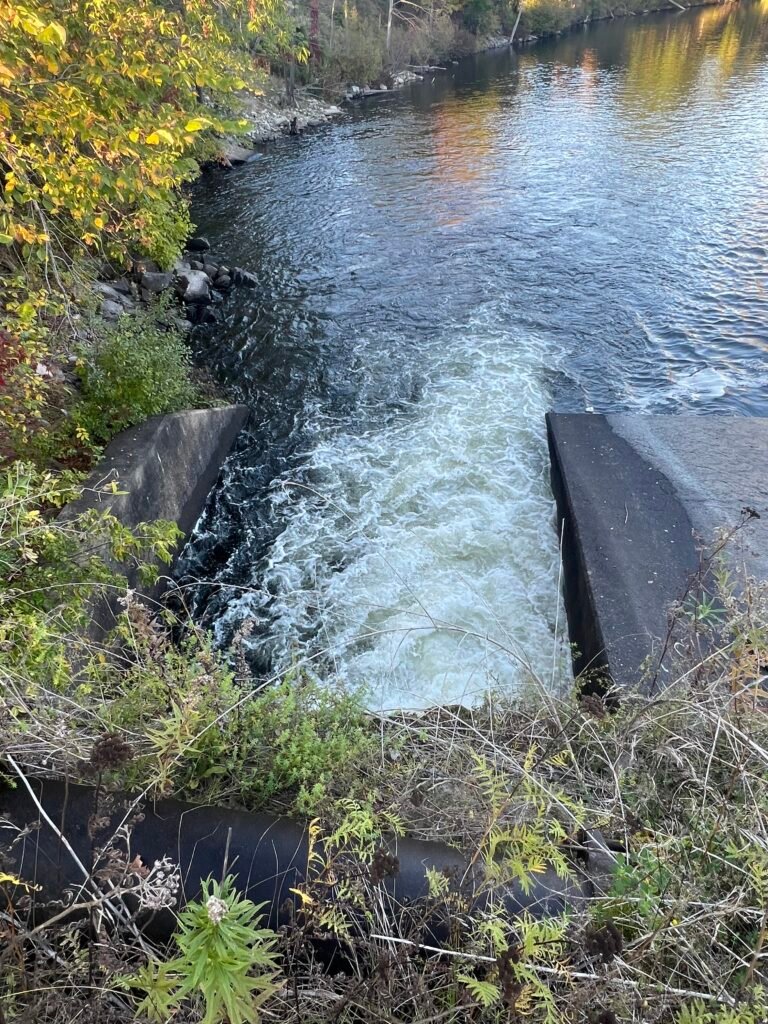
IMPORTANT UPDATE ON PLEASANT POND AND COBBOSSEECONTEE STREAM DRAWDOWN
The work on the New Mills Dam has been completed as of Friday October 9th. Refilling of the pond and stream will begin on October 15th and will continue until the pond reaches winter level (133 ft above sea level).
PLEASE SHARE THIS INFORMATION WITH YOUR FAMILY, FRIENDS, AND NEIGHBORS WHO MAY NOT KNOW.
Video courtesy of Johnnie Beane, New Mills Dam Committee.
Primary Contact: Jack Daniel, Chair, New Mills Dam Committee: revjdaniel@gmail.com
Dam Classification
Name: New Mills Dam Downstream hazard classification: High
Location: Gardiner, ME MEMA ID 346 State ID: ME00095 NID ID: ME00095
Purposes: Water level control, fire protection, stock, or small fish pond, Fish and Wildlife pond, recreation, flood risk
Owners: Towns of Gardiner, Litchfield, and Richmond, Maine
The New Mills Dam Committee (NMDC) oversees the maintenance and repairs of the New Mills Dam on behalf of the owners of the dam, the cities of Gardiner, Litchfield, Richmond, and West Gardiner, Maine. Each town appoints three members to the committee. The City of Gardiner provides administrative support and public works personnel as needed for some routine maintenance activities. The NMDC meets at least four times annually to perform its oversight duties. Committee appointed members are always on site when state inspection, repair or maintenance projects are underway.
Day to day operation of the dam to perform routine maintenance and manage upstream water levels is performed under an agreement with KEI (USA) Power Management Inc. in consultation with Wendy Dennis, the staff limnologist of the Cobbossee Watershed District. All operational procedures are codified in the New Mills Dam Project Operations Manual (last updated 2017) provided by KEI. In case of flooding or a dam failure, emergency procedures are detailed by the Kennebec Emergency Action Plan (last updated in 2025).
The most recent state dam safety inspection in July 2026, determined that the dam is structurally safe and in fair to good condition. The projects described below are part of the New Mills Dam Committee’s long term repair and maintenance plan to keep the New Mills Dam in good condition and functioning at a high level.
Upcoming Repairs and Maintenance to Increase New Mills Dam Resilience to Major Storm Events and Improving Water Level Management
Fall 2026 Maintenance Work – COMPLETED
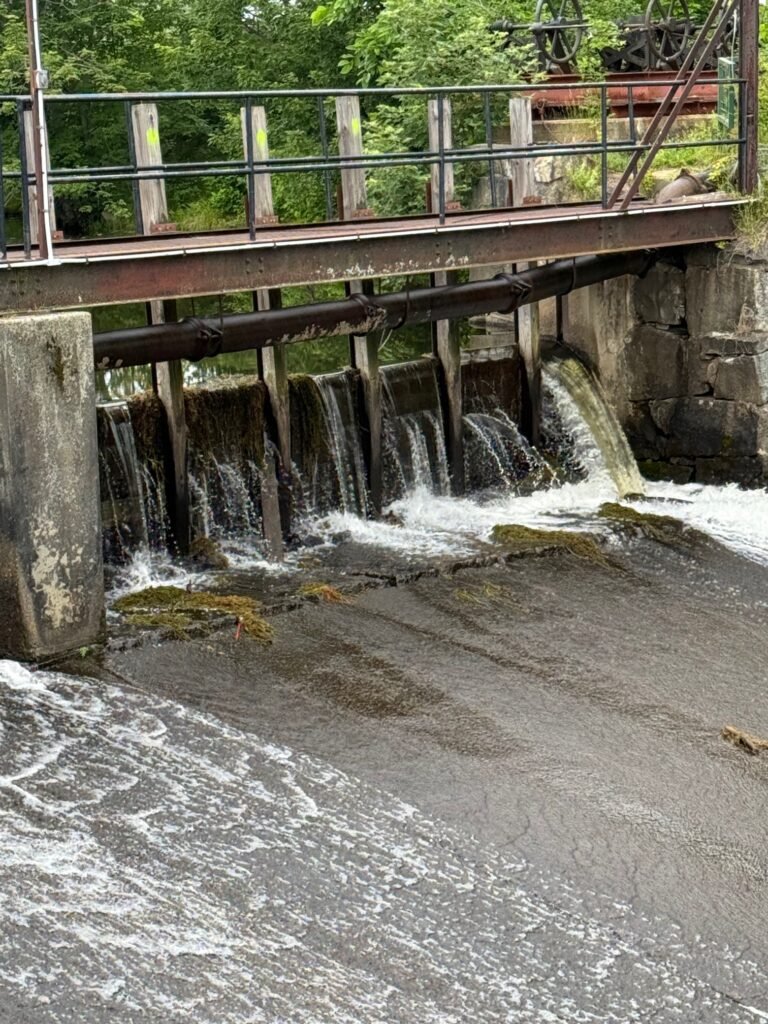
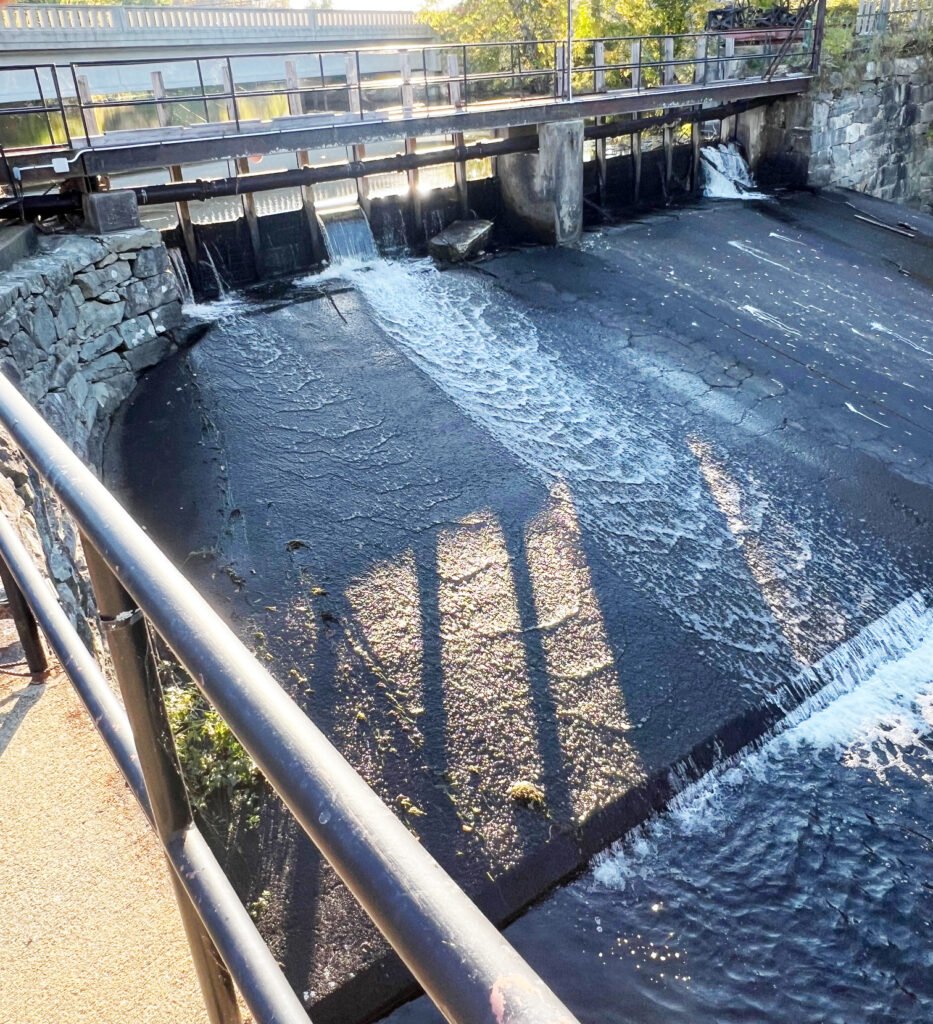
Several maintenance projects were completed on the dam during the week of Oct 5-9, 2026. KEI personnel and Commercial Divers of Maine (CDI) collaborated to replace all the vertical stanchions and flashboards of the main spillway. The flash boards function to set the water level of the pond and stream. CDI performed a thorough underwater inspection of the dam and the main gate draught tubes, the masonry around the gates, and the cribwork below the main spillway apron. All masonry was repointed above and below waterline. Erosion voids in the cribwork (identified previously) were filled with bags of concrete to forestall future erosion until the Phase 1 work can be completed. Reinforced poly sheeting was laid over the upstream edge of the dam to plug suck holes that allow water to flow beneath the dam. The poly is held in place with sand bags. Small holes in th draught tubes of the main gate were filled to stop leakage, and one tube, which is showing excessive wear, is being evaluated by engineers for repair in the near future.
Phase 1: Stabilization of the spillway apron cribwork of the dam – PENDING FUTURE FUNDING
In May 2023, an unexpectedly heavy rain event of 5″ in 24 hours caused extensive flooding of Cobbosseecontee Stream and Pleasant Pond. The video above documents the amount of water overtopping the New Mills Dam at peak flood. As result, the dam’s concrete spillway apron’s foundation – a wood and rock cribwork – suffered erosion on the western side of the cribwork which overlies glacial till on the stream bed. The erosion has been carefully monitored annually by direct visiual inspection by Commercial Divers of Maine, Inc. and preparations are ongoing to repair the damage and stabilize the apron’s cribwork foundation. The New Mills Dam Committee, in conjunction with the municipal owners, have formulated a plan to stabilize the cribwork against further erosion. Engineering for the project was done by Foresight Engineering, Inc. The Committee is now working through the permitting process with Maine DEP and the US Army Corps of Engineers. Funding will come, in part, from the municipal owners.
Phase 2 – Restore Forebay Gates and Masonry – PENDING FUTURE FUNDING
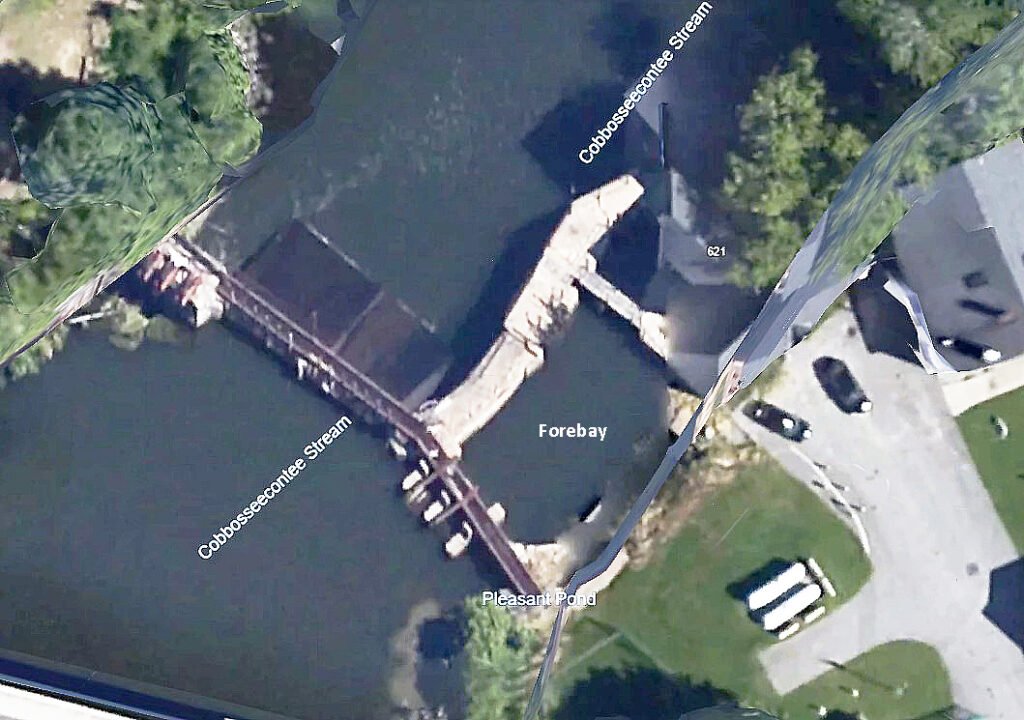
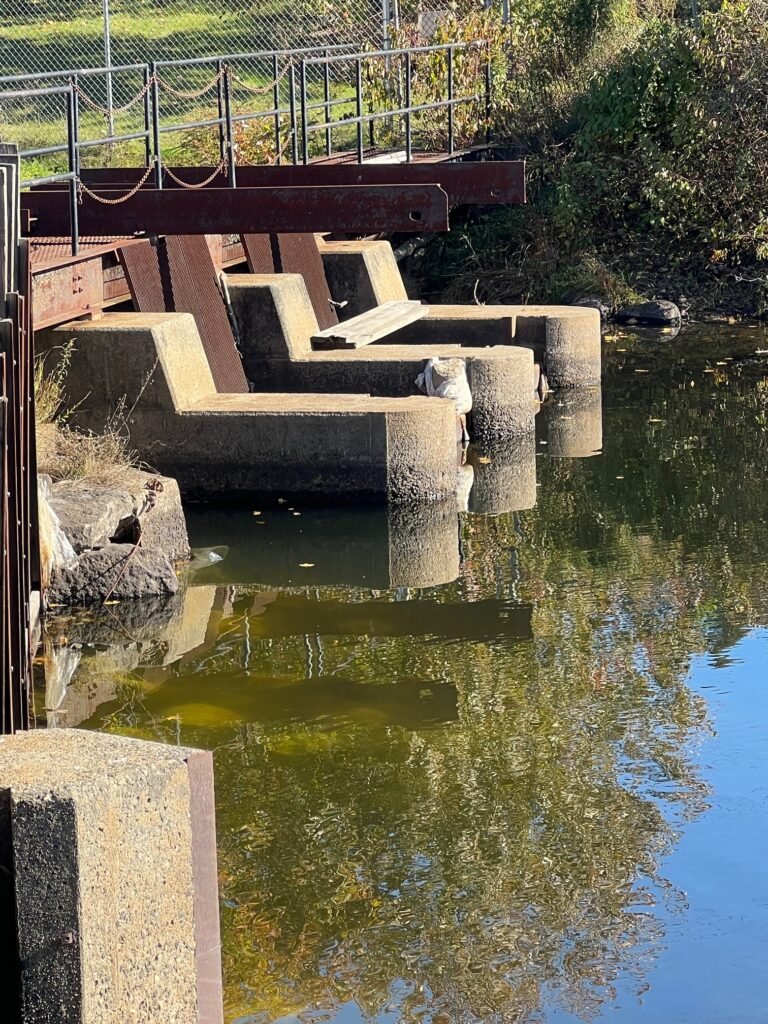
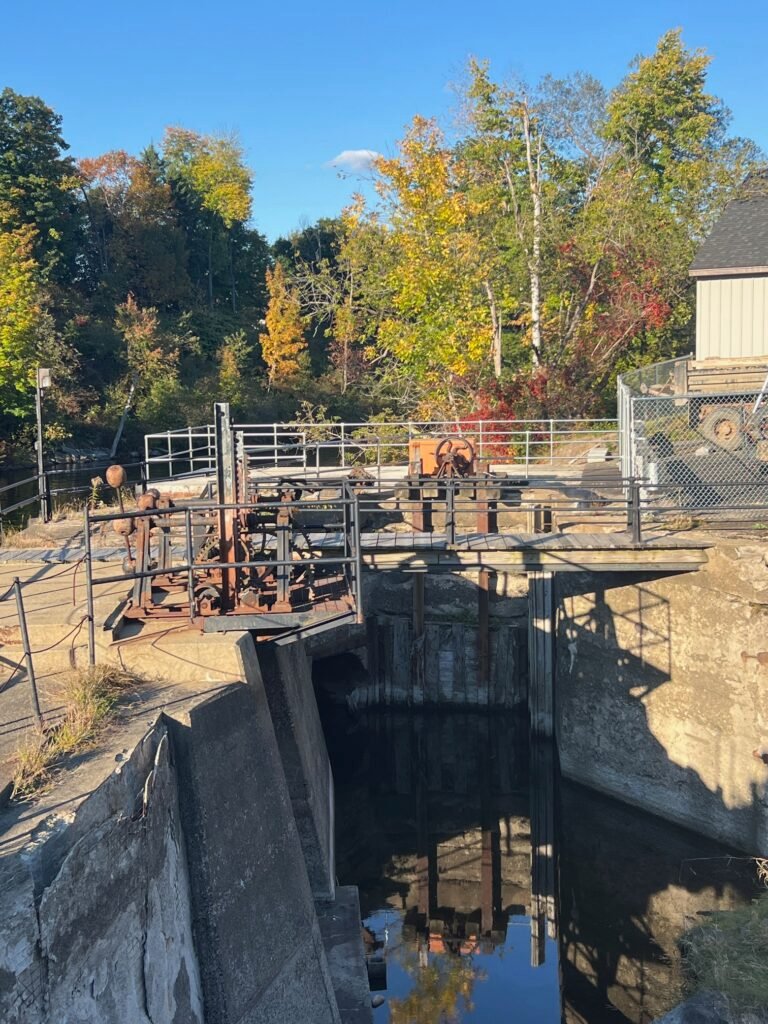
The next project is focused on increasing the spill capacity of the New Mills DAm by restoring the forebay and gates. Formerly, the dam functioned as a hydropower dam, generating electricity to power the Gardiner Water District water pumps for the municipal water supply. When the water source shifted elsewhere, the hydro station was decommissioned and the dam’s purpose shifted to water level control. The forebay was the channel through which water fed into the turbine house. many years ago, the forebay gates were closed, no longer deemed necessary. Climate change has increased the frequency and magnitude of rain events in our region driving a need to increase the spill capacity (cfs – cubic feet per second of water passing through the dam) to facilitate more responsive water level management. Restoration of the two forebay inlet gates – each 6 feet wide and 6-7 feet deep – would nearly double the current spill capacity of New Mills Dam. This phase of work would see the gates infrastructure refreshed and new, power driven gates/gantry systems installed. In additon, the forebay outlet gates would be reopened and all the masonry of the forebay infrastructure would be repaired and stabilized. The New Mills Dam Committee is seeking federal grants plus local matching funds to pay for both Phase’s 2 and 3 of the work. Stay tuned.
Phase 3 – Preventative Maintenance of the Main Gates and Other Miscellaneous Upgrades to the Infrastructure
The final phase of the planned maintenance and repair work focuses on performing preventative maintenance of the main spillway gates, located on the western edge of the dam. These gates have three large draught pipes with manually operated doors to regulate the flow. Depending on a evaluation the gates condition, all necessary actions would be taken to assure full function of the gates going forward and to repair the masonry infrastructure around the gates and the flashboard spillway. Based on dam dafety inspection findings there may be other unforseen maintenance issues to address during this phase of the work.
UPDATE 10-9-26: Commercial Divers of Maine have completed a week of work which included a close inspection of the main gate draught pipes, repointing of the masonry around the gate, and plugging small holes in the draught pipes to stop leakage. One pipe was found to be in need of rehabilitation and we are now in the process of getting that evaluated by engineers and coming up with a plan to repair it.