Aquatic invasive plant species found in Pleasant Pond and Cobbosseecontee Stream as of fall 2025
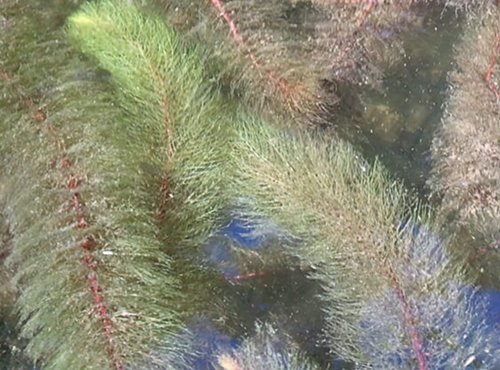
(Myriophyllum heterophyllum)
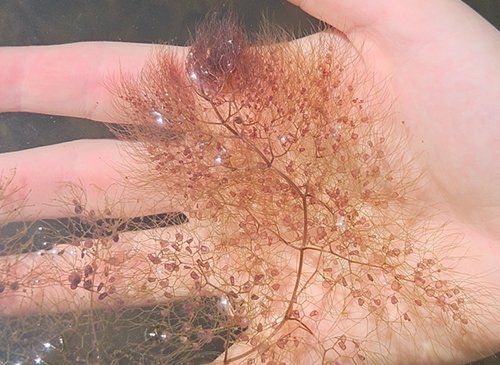
(Utricularia inflata)
Click on an image to learn more.
Images source: Watershed Friends
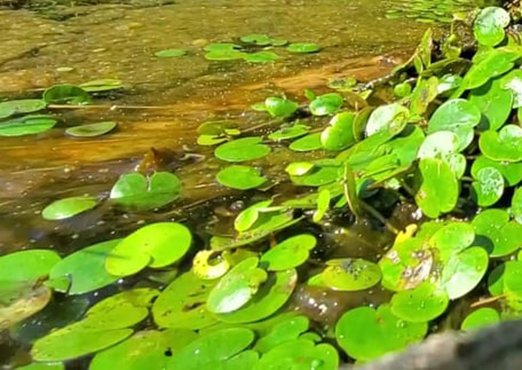
(Hydrocharis morsus-ranae)
To date, there are three known species of aquatic invasive plants found in the Pleasant Pond and Cobbosseecontee Stream drainage: Variable Leaf Milfoil, Swollen Bladderwort, and European Frogbit (see images above). AIS are aggressive and reproduce rapidly. As newcomers to our watershed, these species have few if any natural predators and may rapidly overtake and even displace our native aquatic plants. This will not only detrimentally alter the habitat for other native species, but also choke the lake and stream with vegetation that interferes with boating, fishing, swimming and other forms of water recreation. Ultimately, uncontrolled AIS infestations lower property values in affected areas.
Interactive Map of AIS in Maine – Use this map to see where aquatic invasive species have been found in the Cobbossee Watershed. The map is frequently updated.

What is our responsibility as residents of Pleasant Pond and Cobbosseecontee Stream?
The PPCSLA collaborates with, and pays our partner nonprofit, the Watershed Friends (WF; formerly the Friends of the Cobbossee Watershed), of Winthrop, ME, for AIS services on the lake and steam that include: (1) Courtesy Boat Inspection (CBI) at the Thorofare Road boat launches Fri-Sun on weekends from Memorial Day through Labor Day weekend, (2) lake and stream AIS surveys performed by WF survey teams who ID and locate these species infestations, and, and (3) active removal of AIS using a variety of mehods including barriers, divers hand pulling plants, and using a diver-assisted suction harvesting (DASH). Periodically during the summer months, WF hosts volunteer-assisted “Frogbit Fridays” which are open to anyone with a kayak or canoe who would like to help remove this aggressive plant. The PPCSLA must pay the WF for these services – please become a member of PPCSLA and generously contribute to the AIS Control Fund today. Thanks!
Diver Assisted Suction Harvesting (DASH) – What is that, anyway?
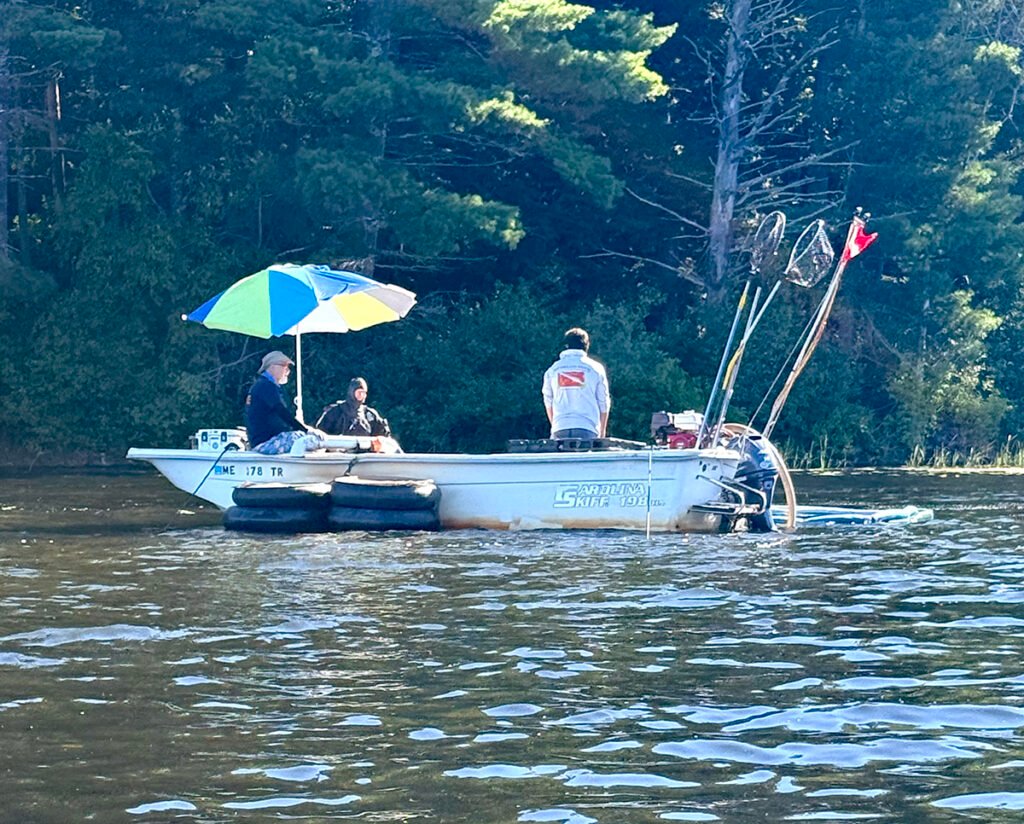
DASH removal of invasive plants uses a pump-driven, vacuum lift system to bring plants uprooted by SCUBA divers to a collecting bin on board the boat. As the diver hand-pulls plants out by their roots, they’re fed into the hose which then carries to them to a collecting bin. How does that work? After filling the suction hose with water (priming), the “vacuum” is created by injecting water, under high pressure, into the lift hose in the discharge direction, that is, upwards, which creates a displacement of water (vacuum) in the lower suction hose which is replaced by water from the diver’s end. You create the same effect when siphoning gas from a container. The water is pumped upwards through the hose and discharges into the collecting bins (seen as the inner tube floats next to the boat in the picture). DASH is a highly efficient method for removing invasive plants when they are in high density. Once harvested, the plants are landfilled or composted. An interesting side note, DASH system technology is derived from small gold dredge systems used by miners working in rivers.
View video of DASH boat in action (1:14′) (source: Watershed Friends)